You only have 2 days left to order your free at home covid test you only have 2 days left to order your free at last martin you only have 2 days left to vote you only have 2 days left to bid what happens when you only have 21 chromosomes memes when you only have 2 friends if you only have 2 days in paris can you only have one child in china you only have yourself quotes if you only knew you only get what you give

You Only Have 2 Days Left to Order Your Free At-Home COVID Tests. Here's How
For the most up-to-date news and information about the coronavirus pandemic, visit the
WHOand
CDCwebsites.
Time is running out to get your free at-home COVID-19 test kits because the US federal government is ending its program soon. USA Today first reported on Aug. 26 that the decision was made due to a limited supply of tests. This comes just as the fall season approaches and as students start the new school year.
Over the weekend, US Postal Service updated its page for at-home COVID tests with an announcement that says the "order for free at-home COVID-19 tests program will be suspended on Friday, September 2, 2022."

The last day to order free COVID tests is Friday, Sept. 2.
USPS/Screenshot by Peter ButlerIn January, the government launched CovidTests.gov, a website that let households order four free rapid antigen COVID-19 tests shipped by the US Postal Service. The site added four more free tests in March, and then another eight more in May.
If you haven't received any tests, you can still get all 16 free tests, but you'll need to act quickly. Luckily, it only takes two minutes to order your tests. See below to find out how to get test kits, when they'll arrive and what to do if you have problems.
How to get free COVID-19 tests
You only need to provide the US Postal Service with a few bits of information to get your free test kits. You won't be asked to provide any credit or debit card details, as both the tests and the shipping are free. Here's how to get your free test kits.
1. Visit special.USPS.com/testkits. You can also get there via covidtests.gov.
2. Enter your contact details and shipping information.
3. Click Check Out Now.
4. Verify that your information is correct and select Place My Order.
All orders will be shipped via First Class Package Service.
People who can't access the website or who have trouble ordering online can call 800-232-0233 to order their free tests.
How can I track my order?
Once you place your order, you should receive a confirmation email. When your package ships, you'll receive email notifications providing you with shipping updates, including a tracking number and estimated delivery date. Note that for the third round, you'll receive two packages that'll likely arrive on different days, so look for two confirmation emails with your tracking numbers.
Once you receive it, you can either click the tracking link or copy and paste the tracking number into the Postal Service's website's tracker.

More free COVID-19 test kits are coming.
Sarah Tew/CNETHow many test kits can I get?
According to the USPS, each residential household is eligible for three rounds of free at-home rapid antigen COVID-19 tests, for a total of 16 kits.
Only one person per address will be able to place an order for the free tests, even if you have multiple people living in your home.
Can I choose which brand test I get?
No, there isn't an option to choose which brand of test you will receive. All tests are rapid antigen tests authorized by the Food and Drug Administration, like iHealth.
When will the test kits arrive?
Tests are typically sent out within seven to 12 days of an order being successfully placed and are delivered by the USPS within one to three days of shipping.
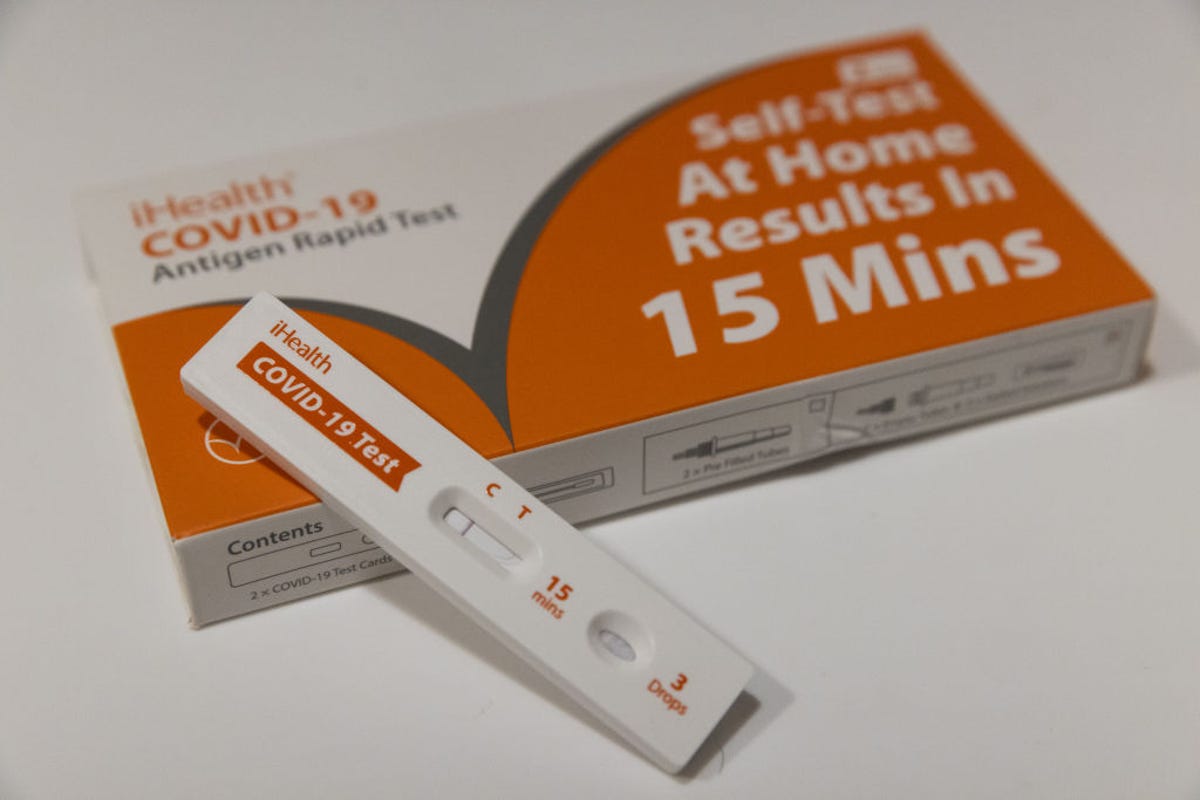
iHealth COVID-19 rapid antigen tests are supplied for free via USPS.
Angus Mordant/Getty ImagesWhat if I haven't received my first or second batch of test kits?
The USPS says its site has had some difficulties recognizing certain residential addresses, especially apartment buildings, multifamily homes and residences connected to commercial properties.
If you have had issues placing an order, you can file a service request online or call the USPS Help Desk at 800-ASK-USPS.
Is it OK to use a test kit that was left outside?
According to the FDA, manufacturers have ensured that the tests remain stable at various temperatures, "including shipping during the summer in very hot regions and in the winter in very cold regions."
But a test may be damaged by being left outdoors in freezing temperatures or being used immediately after being brought inside from freezing temperatures.
The ideal temperature to store rapid antigen COVID-19 test kits is between 59 and 86 degrees Fahrenheit.
The FDA has warned about the effect of extreme heat on COVID tests, saying that, "long exposure to high temperatures may impact the test performance," but also recommends simply confirming the test line on the kit.
"As long as the test line[s] appear as described in the instructions, you can be confident that the test is performing as it should," the FDA site says.
The information contained in this article is for educational and informational purposes only and is not intended as health or medical advice. Always consult a physician or other qualified health provider regarding any questions you may have about a medical condition or health objectives.
Source
Harvesting energy with space solar panels could power the show harvesting energy with space solar panels could power the book harvesting energy with space solar cells harvesting with a kubota wrh1200 harvesting energy from lightning harvesting energy from wind turbines harvesting energy from black holes
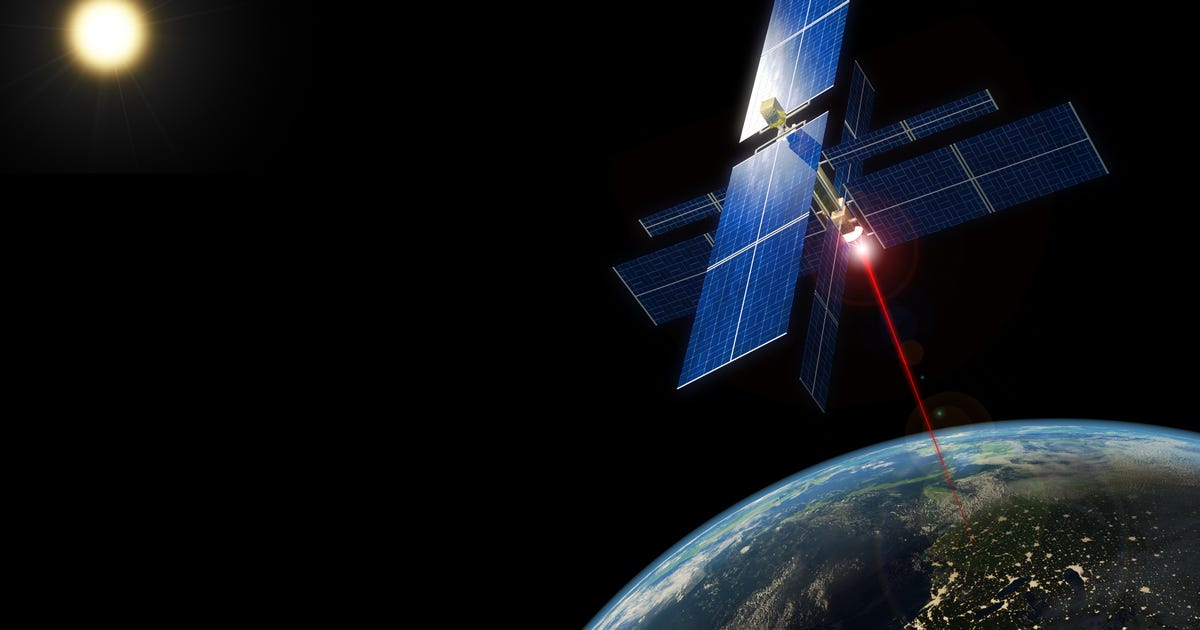
Harvesting energy with space solar panels could power the Earth 24/7
Solar power has been a key part of humanity's clean energy repertoire. We spread masses of sunlight-harvesting panels on solar fields, and many people power their homes by decorating their roofs with the rectangles.
But there's a caveat to this wonderful power source. Solar panels can't collect energy at night. To work at peak efficiency, they need as much sunlight as possible. So to maximize these sun catchers' performance, researchers are toying with a plan to send them to a place where the sun never sets: outer space.
Theoretically, if a bunch of solar panels were blasted into orbit, they'd soak up the sun even on the foggiest days and the darkest nights, storing an enormous amount of power. If that power were wirelessly beamed down to Earth, our planet could breathe in renewable clean energy, 24/7.
That would significantly reduce our carbon footprint.
Against the backdrop of a worsening climate crisis, the success of space-based solar power could be more important than ever. The state of the climate is in the spotlight right now as world leaders gather in Glasgow, Scotland, for the COP26 summit, which has been called the "world's best last chance" to get the crisis under control.
CNET Science is highlighting a few futuristic strategies intended to aid countries in cutting back on human-generated carbon emissions. Next-generation tech like space-based solar power can't solve our climate problems -- we still need to rapidly decarbonize our energy systems -- but green innovation could help achieve the goals of the Paris Agreement: Limit global warming to well below 2 degrees Celsius (3.6 degrees Fahrenheit) by the end of the century.
An unlimited supply of renewable energy from the sun might help us do that.
From science fiction to fact
For decades, space solar power has lived in the minds of science fiction lovers and scientists alike.
In the early 1900s, Russian scientist-mathematician Konstantin Tsiolkovsky was steadily churning out a stream of futuristic designs envisioning human tech beyond Earth. He's responsible for conjuring things like space elevators, steerable rockets and, you guessed it, space solar power.
Since Bell Labs invented the first concrete "solar panel" in the '50s, international scientists have been working to make Tsiolkovsky's sci-fi fantasy a reality. They include Japanese researchers, the US military and a team from the California Institute of Technology spearheading the Space Solar Power Project.
Space solar power "was investigated extensively in the late 1960s and the 1970s, sort of in the heyday of the Apollo program," said Michael Kelzenberg, senior research scientist on the project.
Unfortunately, due to the materials' weight and bulk, the era's technology wasn't advanced enough to cost-effectively achieve the feat. It would've been exceptionally difficult to send classic solar panels to space via a rocket without breaking the bank.
"The distinctively unique and defining feature of the Caltech approach is a focus on reducing the component mass by 10 to 100 times," said Harry Atwater, the project's principal investigator. "This is essential to reducing both the manufacturing and the launch costs to make space solar power economical."

A structural prototype of Caltech's lighter solar panels.
Caltech/The Space Solar Power ProjectA sky full of solar panels
Instead of rocketing traditional solar panels to space, the Caltech team advocates a new type of panel that's lighter, more compact and foldable. They suggest dispatching into orbit a large number of these airy, mini solar panels resembling tiles.
Each individual tile has everything it needs, like photovoltaics, to harvest solar energy. When connected in space, the little squares essentially make a giant renewable energy mine floating around Earth.
Though the team has been looking at a range of composites to create the ideal ultralight structure, some are actually less effective when compared with Earth-based solar panels. But Kelzenberg notes that in space, "effectiveness" earns a new meaning.
"The increase in effectiveness really comes from the fact that by putting them in space, they get plenty of intense sunlight because the sunlight doesn't have to come through the atmosphere," he said. "They also get sunlight, basically, 24 hours a day."
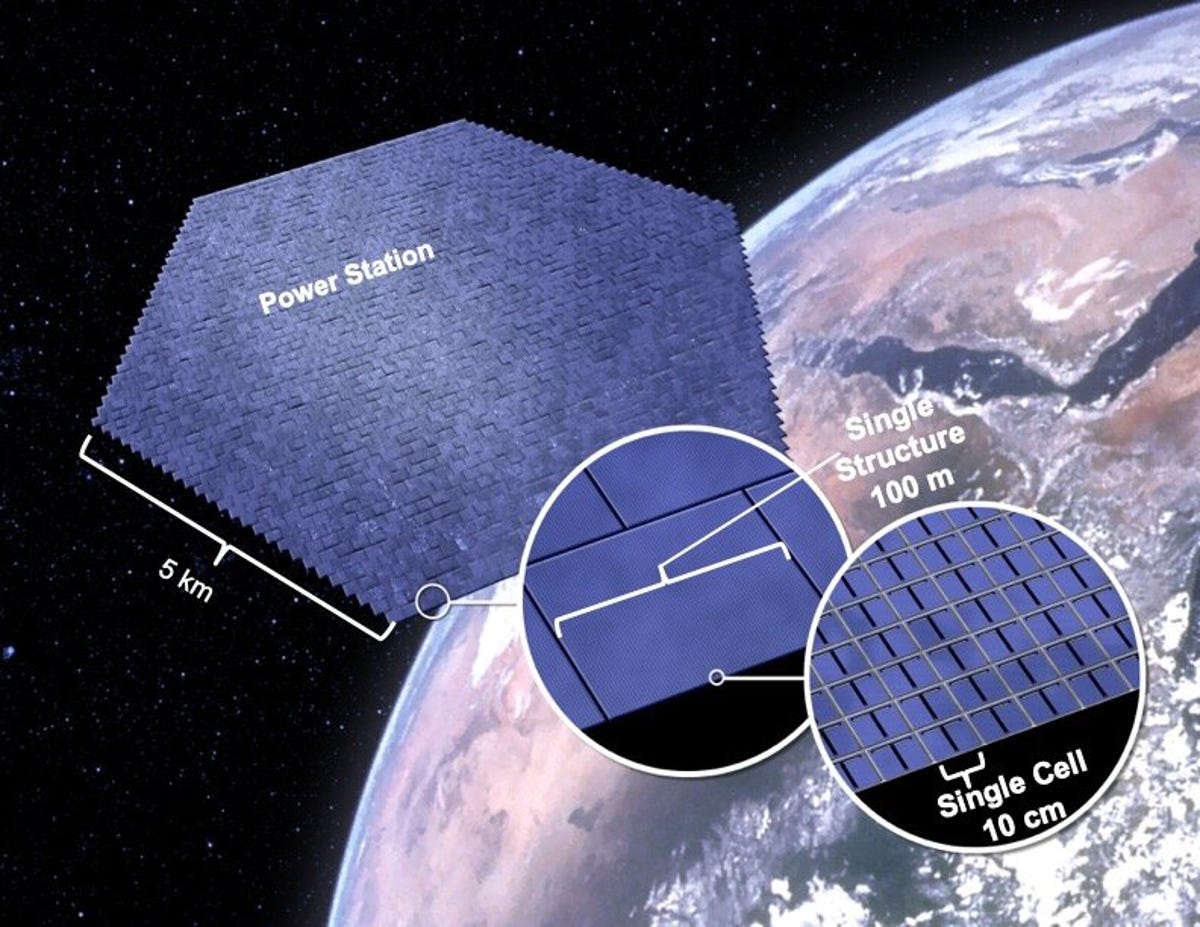
Each small solar panel is a part of something much, much bigger.
Caltech/The Space Solar Power ProjectWhen the sun shines on these panels, they'd absorb bundles of direct current, or DC, energy. In the team's mechanism, that energy would get translated into radio frequencies. The next step would be to bring that power down to Earth.
That would happen, according to the team, through microwave radiation. Radio frequency energy would be beamed toward our planet onto areas reminiscent of solar fields in the desert. But in place of what are typically solar panels, these regions would contain receivers with antennas that collect the harvested energy.
It's basically wireless energy transfer, something Nikola Tesla famously alluded to in the late 19th century.
Using such radiation, Kelzenberg says, allows the system to operate in rain and fog, at night and during gentle storms, only risking disruption by the most severe weather. However, one question often raised about wireless radiation patterns is whether they would adversely impact vegetation or features of the land.
Atwater says that isn't a concern.
"The power density received on Earth would be equivalent to the power density in sunlight on a sunny day," he explained. "And systems for space solar power can be designed to be intrinsically safe in this regard."
As an extra safety precaution, Kelzenberg says, familiar measures can be taken, like cordoning off the receiver zone. Cellphone towers, which use a similar form of wave communication, do the same.
After the Earth-planted receivers retrieved the energy in the form of radio frequencies, they'd work with a ground station to convert it back to DC energy, which would then be transformed into alternating current power, or AC power, fed into the utility grid, Atwater said.

Wireless energy transfer could help bring us 24/7 clean energy.
Caltech/The Space Solar Power ProjectIt's a complex process, but that last bit, the AC power, is the regular old electricity that runs through your house's sockets to charge your iPhone and give life to your laptop. Voila.
Beam the Earth up, Scotty
"Our first space flight to demonstrate space solar power component technology is now scheduled for late 2022, on a commercial spacecraft," Atwater said.
Though the team won't be launching the real deal, they'll be conducting an experiment that'll demonstrate the feasibility of the technologies on a smaller scale. It'll be a makeshift, simpler form of the invention. They'll even be sending a number of solar cells that've never seen the vacuum of space before.
But one day, if space-based solar power becomes a reality, it could change the world.
Not only would it help power remote areas and balance out the power grid to prevent outages, it could also send energy to mining operations on other planets.
"Space solar power can be deployed to remote areas on Earth where there is not an existing utility grid; it could also be used to generate baseload power on the moon or Mars via a similar scheme of orbital power generation and beaming to the surface," Atwater explained.
Most importantly, the energy humans could generate via 24/7 sun power would be enough to meet the climbing demands of our planet and even replace nuclear or coal power. "It represents a source of 'baseload' power that is continuously available, unlike solar panels on Earth," said Atwater.
Added Kelzenberg, "That's why we think that it can play an important role in going to a fully carbon-neutral power grid in the future."
Of course, there's a long road ahead. Even if the team's 2022 experiment is successful, there are manufacturing costs to consider, as well as legal questions about taking up orbital space (there may be governmental restrictions). Questions around the practicality of replacing known power grids with space-solar power plants will also remain.
But at the end of that path, we may find something golden.
"I think certainly we can agree that getting a cheap solar panel and putting it on the ground is going to cost a lot less than launching one into space," Kelzenberg said. "But the real virtue of space solar power is the ability to deliver solar energy day and night."
Source
How to cancel a tiktok account are they gonna delete tiktok when is tiktok ending how to cancel order in tiktok how do i cancel tiktok is tiktok going to be deleted how to cancel a tiktok account will tiktok ever end tiktok justkass tiktok justin kranzmann tiktok justin tiktok justcoco

TikTok just canceled a cartoon elephant
Ok, I'll admit it, I've seen both of the Sing movies. Yes, I'm talking about the kid-friendly, celeb-studded animated films where a cast of animals sings upbeat covers of Hallelujah, Don't You Worry 'bout a Thing, and Shake it Off. I voluntarily sat through this lighthearted, goofy song-fest not once, but two times as a full-on-adult, and I'd even say I enjoyed it. As for what I thought of Meena, the shy, vocally gifted elephant voiced by pop singer Tori Kelly? She was fine for a cartoon elephant, I guess.
Clearly, according to the internet, this assessment was very, very wrong. Hate posts about Meena have proliferated my TikTok "For You" page in recent days, with users setting fire to pieces of paper bearing the character's image or "stepping on" the Sing 2 soundtrack in Target because it displays her face. Torching the character has become a surprisingly popular trend.
So how did this bizarre gathering of virtual pitchforks come to be? It seems people started to turn against the character after a video of her singing Happy Birthday made rounds on TikTok in January. In the clip, from the first Sing movie, Meena belts the birthday song to her grandpa and continues to croon even after everyone else stops. "She was mad extra for singing happy birthday like that," the text over one Happy Birthday video reads. "She tryna get the will," one user wrote in a comment.
@randyfanboy BYE#marrymerandymarsh#chipspartnerandhusbandforever#i❤️randy#gihunshusband#singmovie#sing#fyp#extra#happybirthday♬ Shes so extra and for what - Randy❤️
TikToks reacting to Meena's performance followed. Videos under the hashtag "meenasing" on TikTok had racked up 44.8 million views as of this writing, with seemingly all of TikTok uniting against a common, mammalian enemy.
The original Sing film debuted in 2016, and featured an A-list cast of voice actors including Matthew McConaughey, Reese Witherspoon and Scarlett Johansson. The musical raked in $271 million at the domestic box office and crossed $600 million worldwide. A sequel, Sing 2, arrived in theaters just last year, and has cleared $100 million domestically, the most for an animated movie since Frozen II in 2019.
It's worth noting that not everyone has been here for the "Meena slander," as it's been labeled on TikTok. Some rushed to defend the elephant, who "is the nicest little girl ever," and "just trying to sing happy bday," according to one user. But did it do much to slow the Meena-hating majority? Well, you can see for yourself.
There was the wrecking of an elaborate piece of Meena chalk art.
@_sam_bowles Bye bye meena 🥰 #meena#meenaslander#meenasing#meenatheelephant#sing#sing2#elephant#chalkwaterart#chalk#fyp#xyzbca♬ Shes so extra and for what - Randy❤️
"Bye bye Meena."
This TikToker decided to take on some stuffed Meenas IRL.
@karabellla SHE MUST BE STOPPED! WHOS WITH ME! #meena#bye♬ original sound - Tik Toker
Here's a hilarious parody of Meena's Happy Birthday performance.
@wendys.followed.me they said sing your HEART out not your GUTS boo ❤️
♬ Shes so extra and for what - Randy❤️
There was a video taken from an episode of the Wendy Williams show we all apparently missed.
@dannypicnic #fyp #foryou #foryoupage #meena #sing ♬ original sound - Dannypicnic
A movie-theater concession stand employee doesn't appear jazzed about the Meena poster hanging nearby.
@southwestpark i hate you so much, meena #fyp♬ Shes so extra and for what - Randy❤️
As Meena sings, some girls deliver withering looks.
@linda.pulv meena slander > #fyp#foryou#foryoupage#meena#sing2#RufflesOwnYourRidges#meenaslander @clairecrawmer @aubrey_ryan @maranda.avila ♬ Shes so extra and for what - Randy❤️
This user is here for all the drama.
@midnau im in love with all the vids under the sound #meena#sing#flop#fyp#xyzbca#slander♬ Shes so extra and for what - Randy❤️
TikTok did not immediately respond to a request for comment about the Meena-smearing spectacle.
Source
Android 13 google pixel google pixel 4 android 13 phones getting android 13 pixel experience android 13 is android 13 released android 13 launch date android 13 hacks android 13
Android 13 Has Arrived on Google Pixel Phones
Android 13 is now live, with Google's latest operating system rolling out Monday to Pixel phones and devices. People with Android devices from Samsung, Asus, Motorola and others will have to wait until later this year to receive the update.
The Pixel lineup includes phones, watches and tablets made by exclusively by Google. The company often releases its updates to its own Pixel devices first before a wider release to other manufacturers.
Android 13 was announced in February and previewed at Google I/O in May. It adds tools for privacy and security, enhanced messaging with RCS support, spacial audio with supported headphones and better integration between Chromebooks, watches and other devices running Google's operating system. Android 13, like updates to Apple's iOS, come out in yearly clips, giving owners new features and increased reasons to upgrade their handsets.
See Also: Android 13 Is Coming: Every Feature We Know of So Far
Google's Material You color science has greater presence in Android 13. There are additional color palettes that Pixel owners can choose from. These color palettes are automatically generated based on the phone's chosen wallpaper. More app icons will also be able to match a chosen color palettes.
Other smaller design changes have been made to animations when going through menus to make things look smoother.
Source
Xfinity home security 2021 review the menu xfinity home security 2021 review the outfit xfinity home security 2021 review the bear xfinity home security 2021 review analog xfinity home security 2021 movie xfinity home security 2021 film xfinity home security 2021 movies xfinity home security reviews xfinity home security cost xfinity home security system xfinity home page comcast email

Xfinity Home Security 2021 review: The best professionally installed home security system
Like
- No contract required
- Good mix of Xfinity, third-party device support
- Flexible pricing for equipment, service
Don't Like
- Push to bundle with internet, TV services
- No wireless camera option
- Automations are fairly limited
I have never once remembered to set my alarm system before leaving my house. OK, maybe once or twice I remembered, but it wasn't without first telling my family to all get out of the house so I can close the front door, set the alarm, dash out the door and lock it, all while hoping that someone didn't leave a window open somewhere. Xfinity Home put an end to all of that.
With Xfinity's mobile app, I can see if a window or door is open, a light is on or a motion sensor is actively being triggered. I can adjust my thermostat and check my cameras. Get notifications if there's water in my basement. Quickly set up automations for all of those devices (well, most of those devices), so that my lights turn on when I open the front door at night and the security system is disarmed before I walk out the door the next morning. And yes, I can use my phone to arm and disarm the system from my driveway, or anywhere else really.
The DIY home security market is now loaded with options that can do similar things and for security cameras alone, there are way cheaper options out there. The perk of going with Xfinity Home, though, is that it's all professionally installed and the individual pieces work well together and can be controlled with a single app. If you're in the market for a home security system that isn't DIY, Comcast beats out all the competitors -- from ADT to Vivint -- which is why we've given it an Editors' Choice Award.

Home security in your pocket.
Josh Goldman/CNETBring in the bundles
When I first reviewed Xfinity Home in 2017, I was already an Xfinity internet and TV customer and used SimpliSafe for my home security. However, following my review, I liked the combination of security and smart home features so much that I signed up for Xfinity Home. However, I did drop its internet and TV services. I'm apparently, according to a Comcast representative, in a very small group of Xfinity Home subscribers who don't bundle it with another of its services.
To give me the full Xfinity Home experience, the company temporarily installed in my home its latest X1 TV box and xFi gateway and xFi pods to create a whole-home mesh network. The installers also updated my touchscreen security panel, called the Xfinity Home Station, to what customers would have in their homes today.
To reiterate, you do not need to have Xfinity TV or internet service to get Xfinity Home. However, because the xFi gateway and Home Station are designed to work together, there are benefits to bundling with Xfinity's internet service, a company representative said. The gateway's security protection for your network, for example, extends to devices connected to it as well, including cameras. It also has an option to pause connections to devices on the network (I used this feature a bunch to limit screen time for my kids) that can be used to blackout your cameras should you want some privacy. Plus, if you change your Wi-Fi credentials, it will automatically update your Xfinity Home equipment as well.
I would argue that with any newer Wi-Fi router worth owning you're going to get network security to protect your devices and the ability to block network access to specific devices. I certainly have those features on my personal router and have not had any issues using it with Xfinity's security equipment. That said, those already with Xfinity internet or considering getting it can expect a seamless experience with Xfinity Home based on my use of the two together.
Of course, the more you bundle, the better your overall package price. In an unexpected twist, pricing has actually improved since I initially signed up for it.
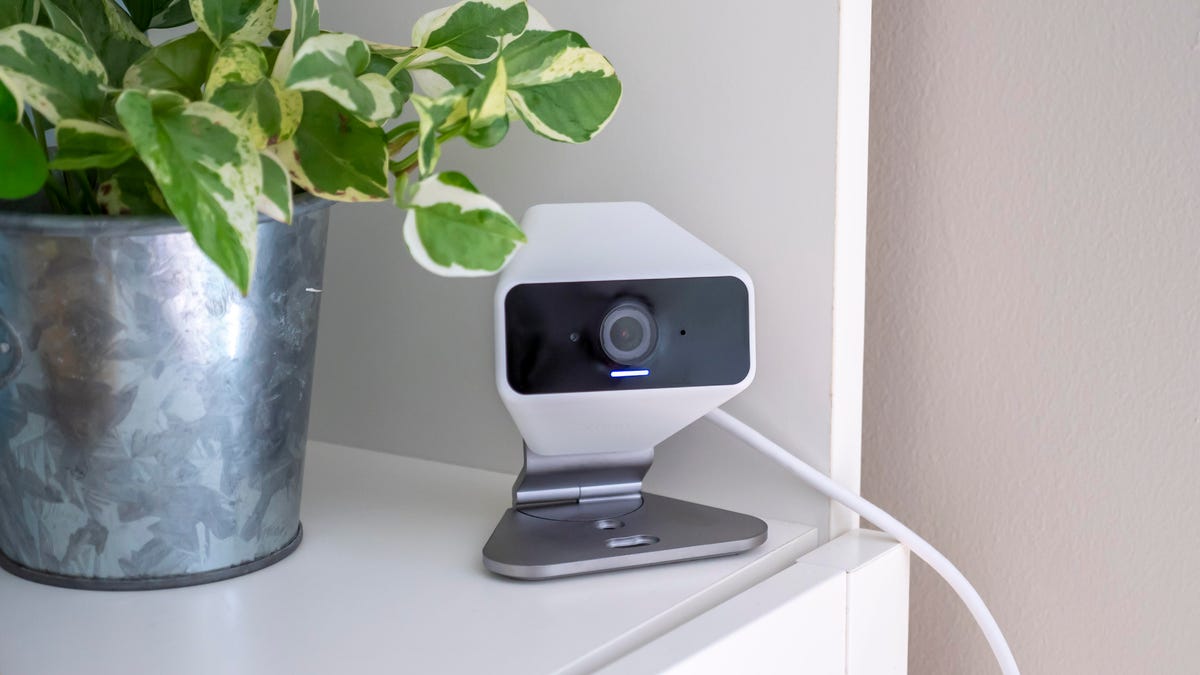
Xfinity's little cameras have excellent image quality indoors and outside.
Josh Goldman/CNETRight now, the basic service with professional monitoring is $30 a month. Adding 24/7 camera recording with storage for 7 days and for up to six cameras brings your monthly bill up to $40. Combined with the top-tier TV service and Gigabit internet, my bill as a new customer total would be $210. However, this is going to vary depending on the tiers of services you choose and how many of them you're bundling together. The same goes for installation fees, which is $50 in my area if I'm installing multiple Xfinity services or $60 just Home alone. You'll need to check your area to see what services are available.
More importantly, Comcast has done away with a service contract requirement for Xfinity Home. You will still need to buy equipment you can either purchase outright or in 24 monthly payments (more on that below). A majority of customers opt for the payment plan option, an Xfinity spokeswoman said. If you buy your equipment, you can end service whenever you want.
Device decisions

Start with an equipment package and flesh it out with other devices.
Screenshot by Josh Goldman/CNETFor new users, Xfinity offers three basic equipment packages to get you started. If you want extras of anything, you can just tack them onto your bill. You can call Xfinity to talk through what you might need if you're not sure what you need for your home.
Base Home System: $360 or $15 per month for 24 months
- 1x touchscreen controller
- 3x door/window sensors
- 1x pet-friendly motion sensor
- Battery and cellular system backup
- Xfinity Home Security yard sign
Complete Home System: $480 or $20 per month for 24 months
- 1x touchscreen controller
- 5x door/window sensors
- 1x pet-friendly motion sensor
- 1x wireless keypad
- 1x HD indoor/outdoor Xfinity camera
- Battery and cellular system backup
- Xfinity Home Security yard sign
Ultimate Home System: $600 or $25 per month for 24 months
- 1x touchscreen controller
- 10x door/window sensors
- 1x pet-friendly motion sensor
- 1x wireless keypad
- 2x HD indoor/outdoor Xfinity cameras
- Battery and cellular system backup
- Xfinity Home Security yard sign
Prices for à la carte equipment are fairly reasonable, and Xfinity doesn't hide its pricing as you can see in the screenshot above. A window or door sensor will run you $20 from Xfinity while a similar sensor from competitor Vivint costs $50. Xfinity's indoor/outdoor camera is $120, while Vivint's is $400 for outside and $200 for inside. A similar camera from ADT is $290.
Speaking of cameras, Xfinity has made it more affordable to add them to your system. There used to be a per-camera per-month charge. Now, it's just $120 each for the cameras and if you want 24/7 recordings for up to seven days it's just a flat $10 extra per month for up to six cameras. You can also skip the recordings and simply use the cameras to receive activity notifications.
If you're interested in nothing but cameras, Xfinity offers one more service option for xFi internet subscribers. The Xfinity Home Self Protection plan lets you add up to six cameras to your home (for $120 each) with 24/7 video recording for $10 a month.
Get smart
Once you settle on the security equipment, you can build out your package with Xfinity's Zen thermostat and outlet controller that can turn lights or small appliances on and off. I really like the look of the Zen thermostat, it works well and it's easy to use. (Oddly, the only people I've had in my house who haven't been able to use it are HVAC repairmen.) The outlet controllers are nothing special but are a nice addition if you want to, say, trigger a lamp to turn on when a door opens.

You can add Comcast's Zen thermostat to your Home setup.
Josh Goldman/CNETYou can also integrate a large and growing list of third-party devices into your Xfinity Home system. The list includes smart light bulbs from Lifx, Philips and Sengled, Chamberlain MyQ garage openers, August, Yale and Kwikset locks and even Tile trackers. Product support does change, however, so you may want to check the list before you set up an install.
The one thing that's missing from Xfinity and third-party support is a video doorbell. That's easily handled by putting an Xfinity camera at your door and setting it to notify you when a person is detected. They're good cameras, too, with HD resolution, audio capture and night vision. It also has artificial intelligence that can tell the difference between a car, pet or person. It will tag your video with what it detects and you can later use those tags to filter your clips. Comcast only offers this camera, though, and it's wired.
Putting it all together
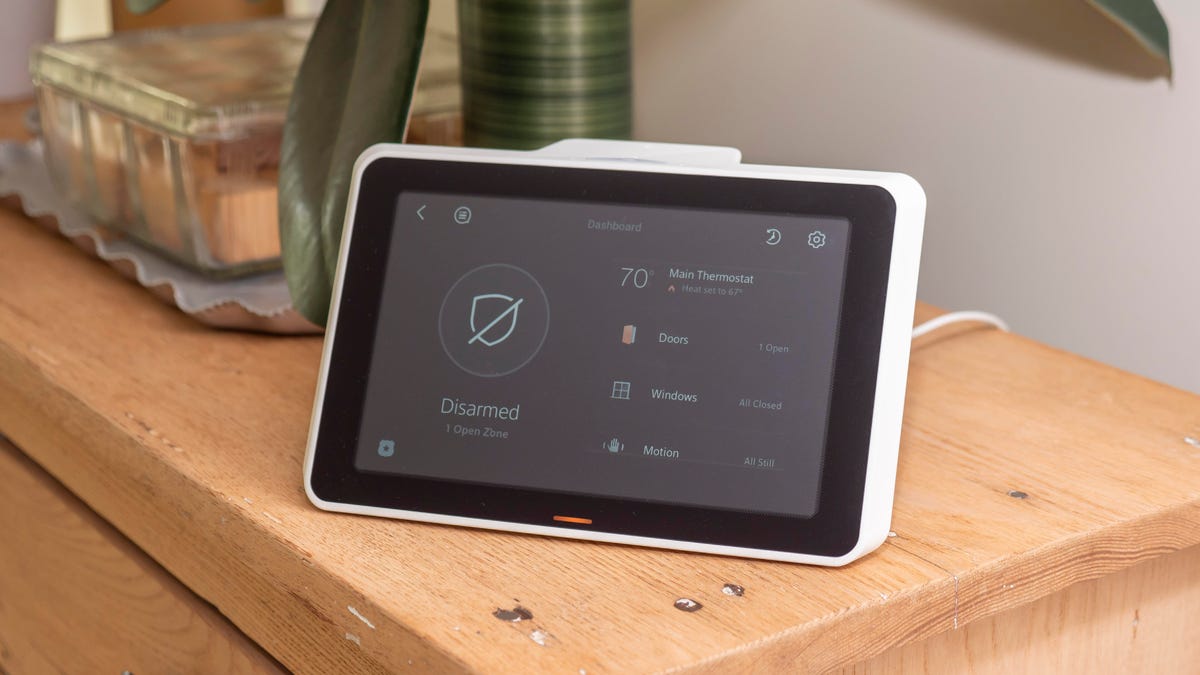
Xfinity Home Station
Josh Goldman/CNETAt the heart of the system at home is the Xfinity Home Station. Designed by Comcast, it has a better display and processing power than its predecessor for smoother, more responsive performance. As I popped through menus and settings, I noticed considerably less lag than the one I had been using. Picture quality from the cameras is also improved making it easier to keep an eye on things without having to look at my phone. The Home Station has a 4G cellular radio and a backup battery, too, just in case my power and internet go down. It also acts as a Zigbee repeater to help keep smart home devices connected in larger homes.
One of the benefits of bundling with TV or internet is that you can use the voice remote for its X1 box or Flex streaming box with Xfinity Home. There's a whole list of voice commands to control your smart home, view your camera feeds and, if you have a Tile tracker, find your keys or other stuff. It comes in particularly handy for turning off lights or adjusting your room temp without getting off the couch or opening the app. Like the xFi integration, it's nice if you have Xfinity TV or are considering it along with Xfinity Home, but not a necessity.

Setting up automations is a snap with this app.
Josh Goldman/CNETHonestly, you're probably going to spend most of your time controlling your system with the mobile app. As I said at the top, you can do everything from arming your alarm to checking your cameras and recordings to setting up automations. The app is a breeze to use. Want a lamp to turn on when your motion sensor is tripped and then turn itself off 5 minutes later? How about getting a push notification when a door or window opens? You can set up each of those in under a minute with a few taps.
That's not to say things couldn't be better. While it's easy to set up new rules, there simply aren't a lot of recipes to choose from. For instance, the only thermostat-related one is for getting a notification if it gets too hot or cold in your home. It can't, for example, adjust temperatures based on motion detection. There are no camera recipes at all, so you can't do something like have lights come on if your front porch camera picks up activity.
The dearth of recipes is a shortcoming for sure, but hardly a deal breaker. Cost is likely going to be the biggest deterrent for most people. Doing away with contracts helps and so does the flexibility to pay for the equipment upfront or in installments. Plus, $50 for the professional installation is money well spent considering all that. If you're looking to outfit an apartment or townhouse and aren't planning to bundle Home with other Xfinity services, you might be better off with a DIY kit. Otherwise, Xfinity Home is a simple way to combine smart home tech and security.
Source

Lenovo's stable of ThinkPad laptops include latest Intel, AMD chips starting at $689
Lenovo ThinkPads rule the business laptop market and, although the company's premium ThinkPad X1 models get all the attention, your IT department is more likely to give you something from its X, T, L or P series of laptops. That's nothing to sniff at, though, as the PC-maker announced today that all those lineups are getting refreshed models with 11th-gen Intel or AMD Ryzen 5000 mobile processors.
And those aren't the only enticing changes to the new models. The ThinkPad X13 and X13 Yoga now have up to a 13.3-inch WQXGA display with a 16:10 aspect ratio, giving you more vertical room to work. You'll also find Wi-Fi 6 or 6E in the Intel models, while AMD configurations will have Wi-Fi 6 and mobile 5G or 4G wireless will also be an option. Enhanced security features will include match-on-chip fingerprint readers and IR cameras for facial recognition.
The new 14- and 15.6-inch T-series laptops will share the same processor, wireless and security features as the X13 but will add bright 500- and 600-nit displays to make it easier to work under overhead lights or outside. You'll also be able to get it with entry-level discrete Nvidia GeForce MX450 graphics. But if you need more graphics muscle for design work, you'll want to look at the new P-series laptops.
Also see: Lenovo announced its thinnest ever ThinkPad 2-in-1 at CES 2021, the X1 Titanium Yoga
The ThinkPad P14s and P15s can be configured with 11th-gen Intel Core vPro processors matched with Nvidia T500 workstation discrete graphics. Their displays -- available in 14- and 15.6-inch sizes -- ship with X-Rite factory color calibration as well.
If you're looking for just a general workhorse laptop, the ThinkPad L series is also getting refreshed with new Intel and AMD processors, up to Nvidia MX450 discrete graphics, Wi-Fi 6 and optional 4G wireless and is available in 14 and 15-inch sizes. It's also the least expensive starting at $689 when it arrives in May. That converts to approximately £489 or AU$870.
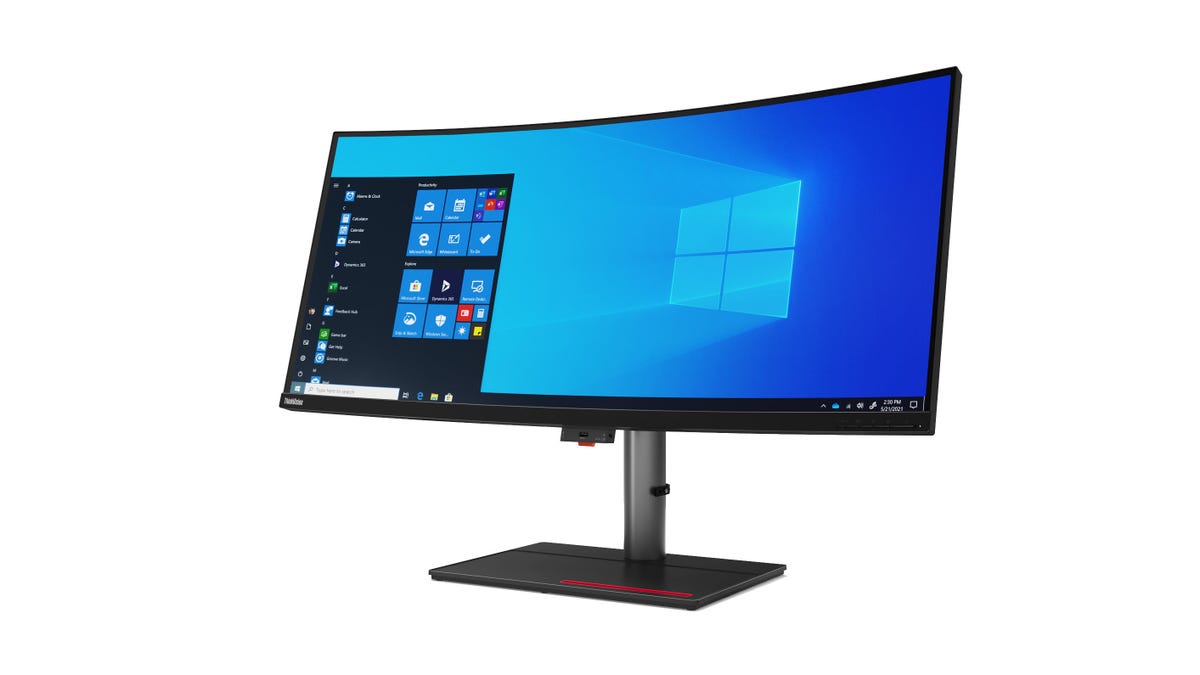
The ThinkVision P40w has a 2500R curvature.
LenovoAlong with the refreshed ThinkPads, Lenovo announced the ThinkVision P40w-20, a 39.7-inch IPS 300-nit HDR-compliant display. It's the world's first Intel Active Management Technology-capable Thunderbolt 4 monitor, which gives IT departments a secure, stable connection for remote setup and assistance. The display also has eKVM capabilities so you can connect to two PC sources and even split those sources simultaneously side-by-side on the display.
The monitor is expected to be available in June for $1,699.
Source
Tags:
- What Type Of Lenovo Do I Have
- Lenovo Laptops Any Good
- Lenovo Thinkpad Laptops Reviews
- Lenovo Thinkpad High End
- Lenovo In The News
- Lenovo System
- Lenovo Serial Number Lookup

More than 11 million Americans could still benefit from refinancing this year: Are you one of them?
Americans have saved $14 billion by refinancing their mortgages since the beginning of the COVID-19 pandemic, spurring tens of billions of dollars in economic activity in the process, according to the most recent mortgage report from Black Knight, a financial services firm for the mortgage and real industries.
"Over the first 18 months of the pandemic, these borrowers reduced their aggregate mortgage payments by more than $1.3 billion per month," Ben Graboske, president of data and analytics at Black Knight, said in the report Monday. "Assuming they all stay in their homes for the duration of 2022 -- this group is on track to save nearly $35 billion in total by the end of next year."
Another 5.5 million Americans tapped into their home equity through cash-out refinances over the past 18 months, saving themselves a combined $322 billion since the start of the pandemic. The number of Americans eligible to refinance has never reached above 10 million until now, and there is still "more incentive [to refinance] in the market than at any time prior to 2020," according to the report.
For Americans with high interest rates, right now remains a golden opportunity to refinance. There's $9.1 trillion in available home equity that remains untapped, and half of it belongs to homeowners with rates at 3.5% or higher. If you are one of them, you may be leaving money on the table if you're not exploring a refi. Plus, almost three-quarters (71%) of that equity is in the hands of homeowners with credit scores of 760 or higher -- a population that has a solid chance of being approved for a new mortgage with a lower interest rate.
Source
Tags:
- More Than 11 Million Americans Could Still Benefit From Cider
- More Than 11 Million Americans Could Still Benefit From Crossword
- More Than 11 Million Americans Could Still Benefit From Banana
- More Than 11 Million Americans Could Still Bene fit From Fish Oil
- More Than 11 Million Americans Could Get Cash
- More Than 11 Million Americans Could Care
- Soundbar With More Than 11 Speakers For Sale
- What Animal Comes In More Than 110 Species
- More Than A Woman Lyrics

Pokemon Go Is Adding Hisuian Electrode and a Ball Guy Costume
Pokemon Go's Johto Tour takes place next weekend, and in the days leading up to it, the game will be holding a Poke Ball Pep Rally. The event kicks off on Feb. 18 and features research tasks, new avatar items and the debut of Hisuian Electrode. Here's everything you need to know about the event.
Event Hours
The Poke Ball Pep Rally begins on Feb. 18 at 10 a.m. local time and runs until the eve of the Johto Tour event, concluding at 8 p.m. local time on Feb. 25.
Featured Pokemon
As mentioned, the Poke Ball Pep Rally will mark the Pokemon Go debut of Hisuian Electrode. Beginning during the event, players will be able to evolve their Hisuian Voltorb by feeding it 50 Voltorb candy.
If you don't yet have a Hisuian Voltorb, you'll have another chance to catch one. Hisuian Voltorb will be appearing in the wild more frequently throughout the Poke Ball Pep Rally, as will regular Voltorb and Foongus. You'll also have a chance to encounter Electrode, Amoonguss, Galarian Stunfisk and other rotund Pokemon in the wild.
Wild spawns
- Voltorb
- Hisuian Voltorb
- Electrode
- Jigglypuff
- Koffing
- Marill
- Wailmer
- Solosis
- Foongus
- Amoonguss
- Galarian Stunfisk
Research Tasks and Rewards
Along with the special Pokemon spawns, new Timed and Field Research tasks will be available during the Poke Ball Pep Rally. Completing these tasks will award you with Poke Balls, Great Balls and Ultra Balls, making this a good chance to stock up on those items ahead of the Johto Tour.
New Avatar Items
In addition to the other event features, Pokemon Go is adding a new clothing set based on the Ball Guy from Pokemon Sword and Shield. The outfit will be available in the Style Shop once the Poke Ball Pep Rally event kicks off.
The Johto Tour event takes place on Feb. 26 and is themed after the original Pokemon Gold and Silver games. Players who purchase a virtual ticket will be able to choose between Gold and Silver "versions" of the event, with some different wild Pokemon appearing depending on which you select. The event is also introducing Apex Shadow forms of Ho-Oh and Lugia.
Source
Tags:
- Pokemon Go Is Adding Hisuian Electrode Stats
- Pokemon Go Is Adding Hisuian Electrode Jumbo
- Pokemon Go Is Adding Hisuian Zorua
- Pokemon Go Issues
- Pokemon Go Friend Codes
- Pokemon Go Cheats
- Pokemon Go Raids

DIY photo filters with everyday objects
Photographers have always loved using filters. Whether it's boosting contrast by pairing a red filter with black-and-white film, or simply adding a polarizer to cut glare, there is a filter for almost every situation.
The following DIY filters are all about distorting light in a creative way, without needing to invest in any extra photography equipment.
While these tips are ideal for interchangeable lens cameras and dSLRs, you can achieve many of the same effects with almost any other camera. Just take a bit more care if you are using items with a compact camera or smartphone.
Cellophane
The humble transparent sheet is great for crafting, but it's even better as a photographic tool. There are a number of different ways you can use cellophane with your camera -- to simulate light leaks or to add a coloured filter to photos.
Grab any colour cellophane you like. Cut off a small segment to fit around your lens. Attach with a rubber band and look through the viewfinder to position it where you like in the frame.

Depending on the effect you desire, you can cover half the lens, a small portion or the entire thing if you want a coloured gel look. You can even experiment with different coloured strips of cellophane taped together to cover the lens for some fun effects.
Play around with the amount, positioning and thickness of cellophane around the lens to get different looks. Also consider using transparency film and adding colour with markers, then holding this in front of the lens.
Bear in mind that by covering the lens with any object, you will lose some image sharpness.
Stockings

A spare pair of stockings can make for a DIY soft-focus filter. Simply slip the stocking over your lens and pull taut, then secure around the barrel with a rubber band. You'll want to make sure that you still have access to the zoom and focus rings for any fine-tuning.
Unless you are looking for a deliberately abstract effect, choose a stocking with a denier of 15 or below so you can actually see through it when it is over the lens.
The stocking can act as a great diffuser in bright light situations, or create a hazy and nostalgic effect on an overcast day.
Wine glass
Take an everyday wine glass and fill it with water. Thanks to refraction, anything you look at through the glass will be inverted and flipped upside down.
Shooting through a wine glass makes an ideal photography project. Simply grab your glass and put it in front of a subject. Choose where you want your point of focus to be within the glass and switch your camera into aperture priority mode. Open up the aperture (by using a small f-number) to blur the background and create a shallow depth of field effect.

Then, you can rotate the entire image 180 degrees in post-processing to turn the refracted image right way up, and the background is turned upside down.
Sunglasses
Don't have a polarizing filter at hand? A pair of sunglasses can achieve a similar effect by cutting down on the glare entering the camera and altering the properties of the light.
Depending on the size of your lens, the sunglasses can either completely cover the scene or provide a secondary inset view like in the image below.

Vaseline
Remember the old "vaseline lens" trick? Create a vintage and ethereal feel in your photos with a touch of petroleum jelly. But, don't go smearing vaseline directly on your lens. Use a piece of cling film pulled tightly around the barrel and attach with a rubber band, then dab vaseline on the edges.
Depending on the placement, you can make it look like a foggy day even when it's just overcast, or add a dreamy feel to portraits. It's even possible to get a tilt-shift effect with two streaks either side of the centre of the lens.
For this effect you can also use a cheap skylight or UV filter so you can rotate the plastic film, or if you're really daring and don't mind cleaning up later on, smear the Vaseline on the filter itself.
Glowsticks

With a spare stash of glowsticks, add a colourful rainbow effect to portraits and general photos. Simply activate the glowstick (smaller works better) and attach across the lens in whatever configuration works best.
Make sure to attach the sticks using a non-marking, easily removable tape such as duct tape so you don't damage your lens. Ensure all zoom and focus rings are free to move, then take photos at your leisure.
Sure you might get some funny looks when using these tools, but it's all in the name of having fun and experimenting with your photography. Go out and enjoy!
Source
Tags:
- Diy Photo Filters With Everyday Objects To Draw
- Diy Photo Filters With Everyday Objects Shaped
- Diy Photo Filters With Braces
- Diy Photo Filters With Diesel
- Diy Photo Filters With Teeth
- Diy Photo Filters With Low Current
- Diy Photo Filters With Granular Activated
- Diy Photo Filters With Fiberglass
- Diy Photo Filters With Free
- Diy Photo Backdrop
- Diy Photo Box
- Diy Photo Coasters

Get up to $25 off Nintendo Switch games right now
Our expert, award-winning staff selects the products we cover and rigorously researches and tests our top picks. If you buy through our links, we may get a commission.
Reviews ethics statementThe Legend of Zelda: Breath of the Wild, Super Smash Bros. Ultimate and Mario Kart 8 are on sale before Black Friday.
Source
Tags:
- Get Up To 25 Off Nintendo Switch Games For Kids
- Get Up To 25 Off Nintendo Switch Games List
- Get Up To 25 Off Nintendo Switch Games On Sale
- Get Up To 25 Off Nintendo Switch Games Amazon
- Get Up To 25 Off Nintendo Switch Pro
- Get Up To 25 Off Nintendo Switch Console
- Get Up To 25 Off Nintendo Switch Sports
- Get Up To 25 Off Nintendo Game
- Get Up To Speed
- Get Upside
- Turkish Get Ups
- I Get Knocked Down But I Get Up Again
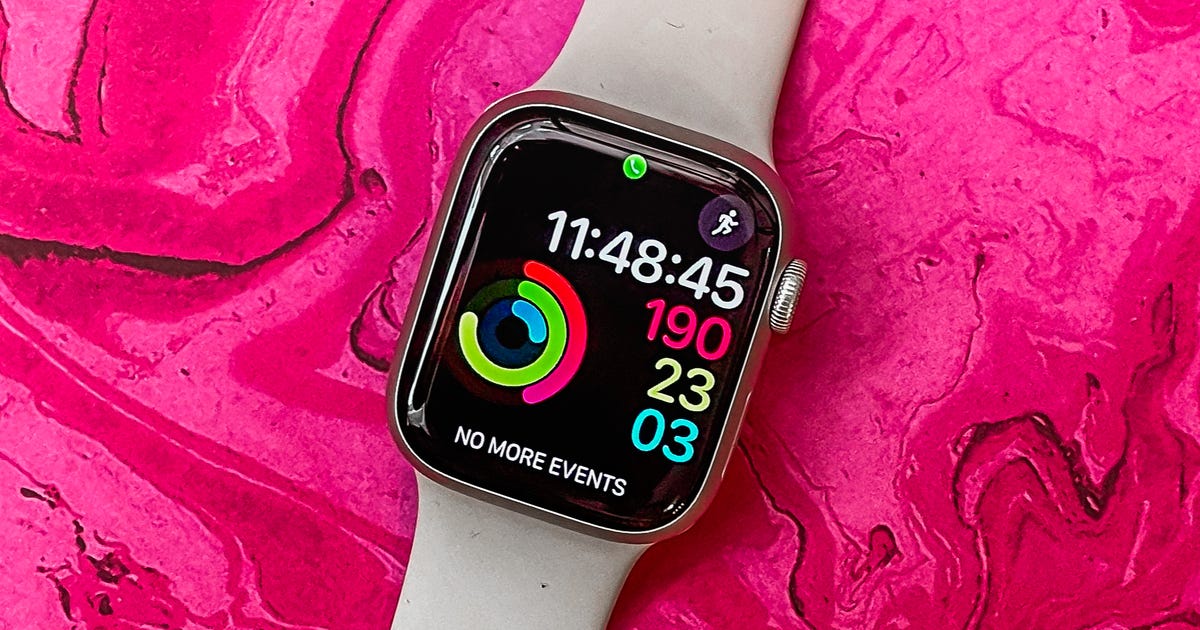
Apple Watch Series 7: 6 Months Later, I'm Still Loving the Bigger Screen
The Apple Watch Series 7 continues to set a high benchmark for the entire smartwatch industry, thanks to its comprehensive health tracking tools and near-seamless integration with the iPhone. Features like a larger screen and fast-charging may be considered iterative updates over previous generations of the Apple Watch. But after using the Series 7 for six months, I'm convinced this wearable is way more than the sum of its parts.
On paper, the larger screen with slimmer bezels might not feel like a significant upgrade. But in practice, it makes all the difference for reading workout metrics and using complications without tapping in to see more detail.
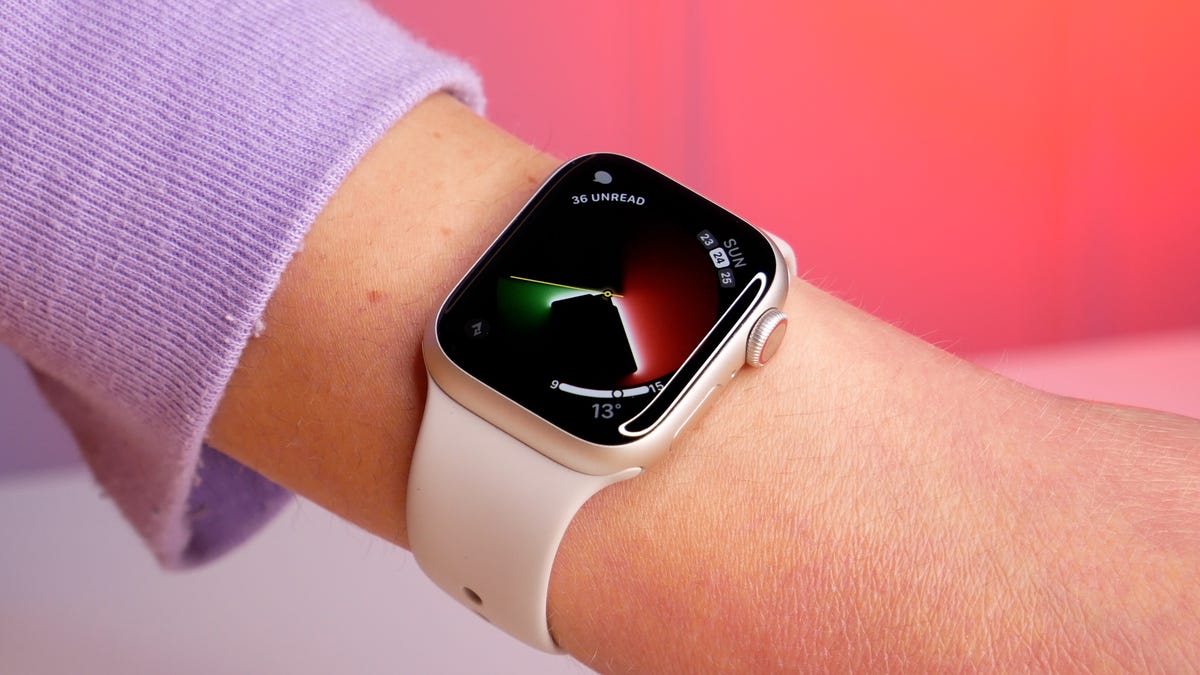
For example, I'm a big fan of the Unity Lights watch face. When I use it on the Series 7, there's more real estate to see complication details like the weather or message notifications. The Series 7 makes nearly everything more readable, whether it's workout stats or using a larger text size for notifications. After using other wearables like the Garmin Venu 2S with similarly sized screens, it's refreshing to boost the font size instead of being limited to an option that's too small to read without glasses.
The larger screen means there's a full QWERTY keyboard, which I found myself using a lot. Typing is a much more discreet way to respond to text messages than speech-to-text dictation. It's hard to be inconspicuous when talking into your wrist. Correcting words or moving the text cursor is trickier though. Sometimes I don't bother to correct a typo and instead send a follow-up message apologizing for my terrible typing skills.
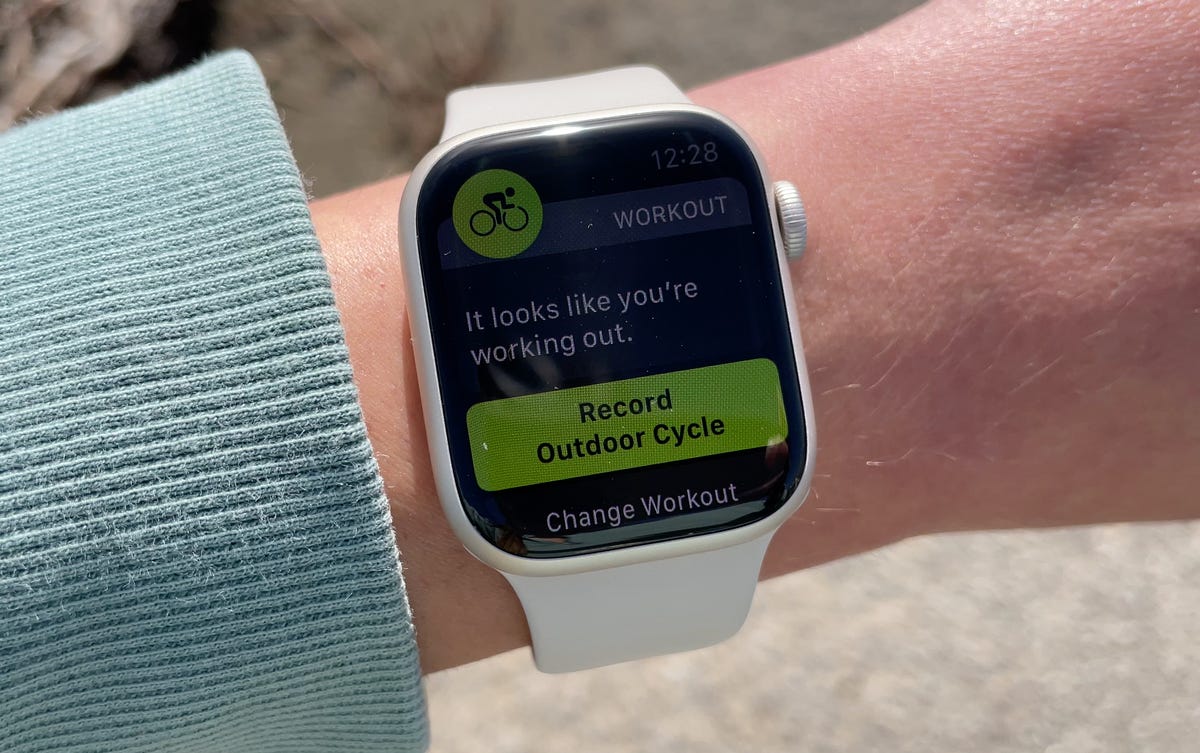
Automatic workout detection on the Series 7.
Lexy Savvides/CNETThanks to WatchOS 8, the Series 7 is also incredibly reliable about automatically detecting workouts, including outdoor cycling. I appreciate the new cycling features in WatchOS 8, including the ability to autopause a ride, and the more accurate calorie tracking for e-bike rides. While these updates are not exclusive to the Series 7, the larger screen makes them more pleasant to use than earlier Apple Watches.
The Series 7's main limitation is battery life. It's largely the same as earlier Apple Watches, which is my biggest disappointment. Without sleep tracking, I can get a maximum of 1.5 days between charges with the always-on display active. If I want to do an extended outdoor workout, I plan to charge the watch more frequently than usual.
Software updates aren't likely to improve the battery life, but there are additions I hope Apple will include in WatchOS 9. There needs to be a rest or sick mode, so you can flag that you're not feeling well and get a pass for not closing your rings that day. I'd also like to see improved sleep tracking and have the Apple Watch put more of an emphasis on workout recovery overall. This could include finding more of a correlation between all the metrics the Apple Watch already gathers, like activity levels, heart rate variability, blood oxygen percent and sleep data. Many other wearables have already started to connect the dots, such as Garmin's Body Battery or the Fitbit Daily Readiness Score.
Find out more about my long-term experience with the Apple Watch Series 7 in the video on this page.
Source
Tags:
- Apple Watch Series 7 6 Months Later I M Still Loving The Lord
- Apple Watch Series 7 6 Months Later I M Still Standing
- Apple Watch Series 7 6 Months Later I M Still Here Sondheim
- Apple Watch Series 7 6 Months Later I M Still A Guy Brad Paisley
- Apple Watch Series 7 6 Months Later I M Not The Only One Lyrics
- Apple Watch Series 7 6 Months Later Meme
- Apple Watch Series 7 Vs Series 6
- Apple Watch Series 5
